
Quick Answer: Warning signs include water on the dash, headliner, or floor after rain, new whistling at highway speed, rattles or loose trim, molding that sits crooked or lifts, adhesive smears or scratches at the edges, cracks spreading from the edge, and new driver-assist or rain-sensor warnings. Any one of these calls for a professional inspection.
A new windshield should feel like nothing happened. The cabin stays dry, the road noise sounds the same, and every feature works like it did before the rock hit. If your car has felt different since another shop replaced the glass, you are probably not imagining it. This guide walks through the specific signs of a bad windshield installation, what causes each one, and how to decide whether it needs a simple adjustment or a complete redo.
Why This Matters
- Leaks cause damage you do not see right away. Water tracking behind trim can stain headliners, soak carpet padding, and create musty odors that settle into the cabin.
- Rust starts quietly. Scratches in the metal frame under the glass can rust if they were never primed, and rust weakens the adhesive bond from underneath.
- A weak bond is a crash safety issue. The windshield helps support the roof and the passenger airbag, so an installation problem is more than a comfort complaint.
- Warranty claims get harder with time. The longer you wait, the easier it is for a shop to argue that the problem came from something other than their work.
- Houston weather will find every gap. A single tropical downpour tests a windshield seal harder than months of dry weather.
The Warning Signs, One by One
Water leaks after rain or a car wash
Where to look: the top corners of the headliner, the trim along the front pillars, the top of the dashboard near the defrost vents, and the front floor mats. A musty smell or glass that fogs more than usual can point to hidden moisture.
Likely causes: gaps in the urethane bead, glass set too low in the opening, or contamination that kept the adhesive from bonding in one section.
Quick check: With a helper inside holding a flashlight, run a garden hose gently along the top edge and corners of the windshield. Skip the pressure washer, which can force water past even a good seal.
Wind noise that was not there before
A new whistle or hiss at 45 to 60 mph on I-10 or Spur 330 usually means air is moving through a gap. Common causes include a molding that never fully seated, the wrong molding for your vehicle, or glass sitting slightly proud of or below the body line.
Rattles, buzzing, and loose parts
- A buzzing cowl panel at the base of the windshield, often from broken or missing clips
- Pillar trim that moves when you press it
- A rearview mirror that vibrates or droops
- A dash panel that ticks over bumps on Garth Road that never bothered you before
Loose pillar trim deserves extra attention. On many vehicles, curtain airbags deploy behind that trim, and automakers often require specific clips to be replaced so the trim stays controlled during deployment.
Crooked, wavy, or lifting molding
- The gap between the glass edge and the body is wider on one side than the other
- The molding looks rippled instead of straight
- Corners lift away from the glass or body
- The black band around the glass edge shows unevenly from side to side
Adhesive smears, scratches, and early rust
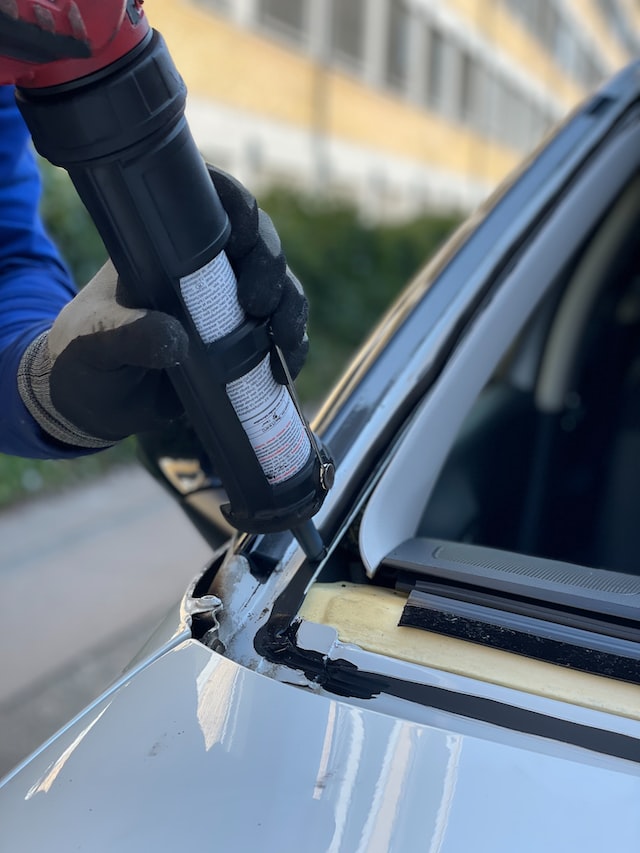
Urethane smeared onto paint or the dashboard shows rushed work. More concerning are signs of paint damage at the glass edge, including small bubbles that appear weeks or months later. Those can indicate rust starting on a scratched frame.
Cracks that start at the edge
A crack that appears from the edge of new glass within days, with no impact point, often signals a stress problem. Glass that touched metal, was set unevenly, or was forced into position can crack on its own.
New dashboard or sensor warnings
- Lane keeping or collision warning messages saying a system is unavailable
- Rain-sensing wipers that run randomly or stop responding
- Automatic high beams that switch at the wrong moments
- A heads-up display that suddenly looks doubled
These point to a camera that was not properly handled after replacement, a sensor that lost contact with the glass, or glass missing a feature your vehicle needs. Our article on ADAS calibration after windshield replacement explains the camera side in detail.
Adjustment or Full Reinstallation? Making the Call
An adjustment may be enough when the issue is a loose cowl panel, a broken trim clip, a mirror that needs remounting, or a molding that can be properly reseated without disturbing the adhesive.
A full reinstallation is usually needed when water is getting past the urethane bond, the glass sits visibly off-center or at the wrong height, a stress crack has formed, or the wrong glass was installed. These problems live in the bond or the part itself, and they cannot be sealed from the outside. Removing bonded glass often breaks it, so a redo commonly means new glass.
Get it inspected before deciding when you are not sure where the water or noise is coming from. A professional evaluation during a windshield replacement inspection can pinpoint the source before anyone starts pulling trim.
What to Do If You Spot a Problem
- Document it. Take photos of molding gaps and water stains, and record a short video with audio of any whistle or rattle while a passenger drives.
- Pull your paperwork. Find the invoice, warranty terms, and the date of installation.
- Contact the original shop in writing. Email or text creates a record showing when you reported the issue.
- Notify your insurer if the work was a claim. Texas law bars insurers from telling you that you must use a specific repair shop, so you can choose who handles the correction.
- Get an independent opinion. A second shop can confirm whether the problem is installation-related before you negotiate a fix or refund.
Common Mistakes When Dealing With a Bad Installation
- Running a bead of silicone around the outside of the glass. It rarely stops a bond-line leak, hides the real problem, and contaminates surfaces a proper reinstall will need clean. The consequence is a messier and more expensive fix.
- Waiting to see if it gets better. Leaks and wind noise do not heal. Delays let water damage spread and weaken your position with the original shop.
- Pulling retention tape off early. Installers often tape moldings while the adhesive cures. Removing it too soon can let the molding shift and create the very gap you are trying to avoid.
- Letting the same shop “touch it up” without an explanation. If nobody identifies the cause, a quick patch often fails at the next heavy rain.
- Ignoring a faint whistle. A small air gap can also be a water path. The noise is often the first warning of a future leak.
- Dismissing a dash warning as a glitch. Driver-assist systems that are not working correctly may not help when you need them.
DIY Fixes vs Professional Correction
DIY
- Replacing a broken trim clip or snapping a cowl panel back in place is sometimes manageable.
- Sealants and tapes from the auto parts store cannot repair a gap inside the adhesive bond.
- Prying on moldings or glass risks cracking the windshield or damaging paint.
- There is no way at home to evaluate rust under the glass or the quality of the bond.
Professional correction
- Leak testing to find the exact entry point
- Proper removal, rust treatment, and priming of the frame when a reinstall is needed
- Correct glass verified against your vehicle’s features
- New moldings and clips where the vehicle requires them
- A written warranty on the corrected work
Why Choose Joey’s Glass
- Experience: Since 1973, Joey’s Glass has fixed plenty of other shops’ windshield mistakes in Baytown. Our technicians know how to trace a leak or whistle back to its source. Learn about our family-owned shop.
- Reliability: We tell you honestly whether you need a minor adjustment or a full redo, and we explain why before any work begins.
- Quality and Technology: Corrections include proper frame preparation, professional urethane systems, and glass matched to your vehicle. OEM auto glass is available when your vehicle calls for it.
- Service Area and Coverage: From our shop at 3011 N. Main, we help drivers throughout Baytown, East Houston, EaDo, and neighboring Harris and Chambers County communities. Review our service area and our auto glass project gallery.
Call 281-427-4705 or request an inspection quote to get a second opinion on your windshield. If a new chip shows up in the meantime, our windshield repair service can handle that too.
Frequently Asked Questions
How soon after a windshield replacement can I go through a car wash?
Many installers recommend avoiding high-pressure car washes for at least a day or two, but the right wait depends on the adhesive used. Ask for the specific guidance in writing, because a car wash too soon can disturb uncured adhesive and moldings.
Is a chemical smell normal after windshield replacement?
A mild odor from the urethane and primers is common for a short time and fades as the adhesive cures. A smell that lingers for weeks, or a musty odor, points more toward trapped moisture and deserves a closer look.
Will my insurance pay to correct another shop’s bad installation?
Usually the original installer’s workmanship warranty is responsible first. If your insurer arranged the job, report the problem to the insurer as well, since it may help push the shop to make it right.
What if the original shop refuses to fix the problem?
Keep your documentation and a second shop’s written findings. You can file a consumer complaint with the Texas Attorney General’s Consumer Protection Division, and a small claims case in your local justice court is another option for recovering the cost of a correction.
Can a windshield that looks fine still be installed wrong?
Yes. Problems such as incompatible adhesive, skipped primer, or rushed cure time are invisible from outside. If a shop cannot tell you what urethane they used or how long they let it cure, a professional inspection is worth considering.