
Quick Answer
After a hailstorm, never accept a same-day mobile windshield replacement from a door-knocking storm chaser. Document damage, file your comprehensive claim, verify ADAS recalibration capability, and use a licensed local installer with OEM-equivalent glass. Rushing this decision risks claim denial, water leaks, and airbag deployment failure.
Why This Matters for Baytown Drivers
 Baytown sits squarely in one of Texas’s most active hail corridors. Storms blowing off Galveston Bay frequently dump golf-ball-sized hail across Harris and Chambers counties, and the body shops and glass shops in our area know what comes next: a flood of out-of-state crews showing up in unmarked vans, offering “free” replacements that quietly leave drivers exposed.
Your windshield is not just a window. In a modern vehicle, it’s a structural component that supports roof crush resistance in a rollover, provides the backstop for your passenger airbag deployment, and houses the cameras that run your lane-keep assist, automatic emergency braking, and adaptive cruise control. A bad replacement after hail damage doesn’t just look ugly — it can turn a survivable accident into a fatal one.
Insurance carriers in Texas also tighten scrutiny on hail claims after major events. Sloppy documentation, duplicate claims from chaser shops, or installations that don’t meet AGSC standards can get your claim denied or your premium adjusted.
What Actually Happens to a Windshield During a Hail Event
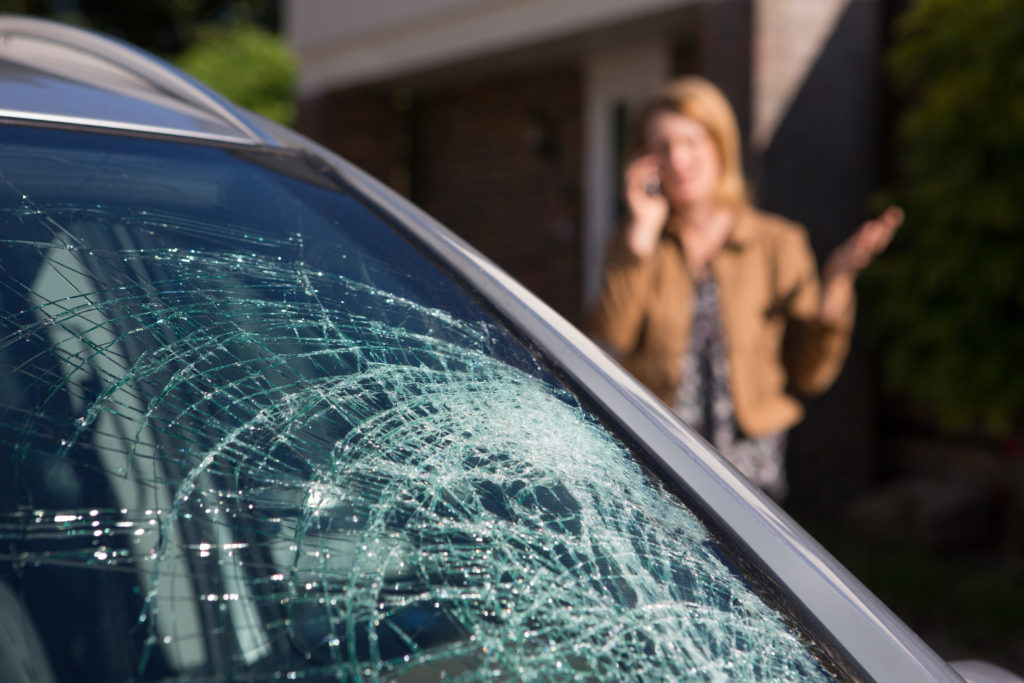
Hail damage on laminated auto glass isn’t always obvious at first glance. The outer ply can take pitting that looks cosmetic but compromises the structural bond. Here’s what installers see most often after Baytown storms:
- Surface pitting — dozens of tiny impact craters that weaken the glass and create glare at night
- Star breaks and bullseyes — radiating cracks from individual hailstone impacts
- Edge cracks — the most dangerous type, often spreading silently for days after the storm
- Delamination — the inner plastic layer separating from the outer glass, visible as cloudy patches
- Frit damage — the black ceramic border around your windshield chipping, which affects the urethane bond
If you see any of the above, you’re past the repair stage. A chip repair won’t restore structural integrity to a hail-pitted windshield, and any reputable shop will tell you so directly.
The Warnings: Five Mistakes That Cost Baytown Drivers Thousands
1. Accepting Door-to-Door Replacement Offers
Storm chasers follow weather radar. They show up in your driveway within 72 hours of a hail event, offer to “handle everything with insurance,” and disappear before the urethane has fully cured. When the windshield leaks, the rain sensor fails, or your ADAS camera throws a fault code, the company name on the paperwork no longer answers the phone.
2. Skipping ADAS Recalibration
If your vehicle is a 2017 or newer and has features like lane departure warning, forward collision alert, or automatic high beams, the camera mounted to your windshield must be recalibrated after replacement. Cheap installers skip this step. The result? Your safety systems either don’t fire when they should, or fire when they shouldn’t — both of which create liability and crash risk.
3. Using Aftermarket Glass That Doesn’t Match OEM Specs
Not all replacement glass is equal. Off-brand windshields can have optical distortion, incorrect frit patterns that interfere with cameras, or thinner laminate layers. For most Baytown drivers, OEM or OEM-equivalent glass is the right call — especially on vehicles with heads-up displays, acoustic interlayers, or solar coatings.
4. Driving Too Soon After Installation
Urethane adhesive needs a minimum safe drive-away time, typically one hour for premium adhesives and up to 24 hours for budget products. Drive too soon and the windshield can shift in its frame during the first hard brake, breaking the seal permanently.
5. Filing Hail Claims Before Documenting Damage
Take dated photos of every panel and the windshield from multiple angles before you call your insurer. Insurers will sometimes try to bundle windshield damage into the larger body claim, which counts as a single deductible — but in Texas, comprehensive glass coverage often waives the deductible entirely. Knowing the difference can save you $500 to $1,000.
Comparison: Local Licensed Installer vs. Storm Chaser Crew
The decision after a hailstorm comes down to who is holding the urethane gun on your car. Here’s the honest breakdown:
- Local licensed installer: AGSC-certified technicians, warranty backed by a physical address you can drive to, in-house ADAS recalibration, direct insurance billing, and accountability that lasts beyond the storm season.
- Storm chaser crew: Out-of-state plates, no permanent local presence, generic glass sourced from the cheapest distributor, no recalibration equipment, and a “warranty” that vanishes when the truck leaves Baytown.
Local established shops survive on repeat business and referrals from neighbors — which means they cannot afford a single bad installation. Storm chasers operate on volume across a single event. The economic incentive alone tells you everything you need to know.
If your situation involves more than just the windshield — say, hail damage that also cracked a sunroof or a side window — you’ll want to work with a shop that handles the full scope of residential and auto glass services rather than running between vendors.
When to Replace Immediately vs. When to Wait
Replace Immediately If:
- The crack crosses the driver’s primary line of sight
- You can feel any flex or hear creaking when you close a door
- Water entered the cabin during the storm or in subsequent rain
- Any cracks reach the edge of the windshield
- The vehicle’s ADAS system is throwing warning lights
You Can Wait a Few Days If:
- Damage is limited to small surface pits with no cracking
- The vehicle is garaged and not driven daily
- You’re still waiting on the insurance adjuster to inspect
Even in the “can wait” category, don’t push past a week. Texas humidity and temperature swings cause cracks to propagate fast, and what was a minor claim on Monday becomes a full replacement by Friday.
The Insurance Process — Done Right
Texas drivers with comprehensive coverage usually have glass damage covered with a zero or reduced deductible, but the process matters:
- Photograph all damage immediately after the storm with timestamps
- File the comprehensive claim before scheduling any work
- Request your claim number and the carrier’s preferred billing process
- Choose your own shop — Texas law gives you the right to select your installer, regardless of what the claims rep suggests
- Confirm the shop bills your insurance directly so you pay nothing out of pocket beyond the deductible
A reputable Baytown installer handles this paperwork dozens of times a week and can walk you through it without confusion.
Why Choose Joey’s Glass Company
Experience: Joey’s Glass has spent years installing auto glass for Baytown, East Houston, and EaDo drivers, including post-storm responses after every major hail event to hit the Gulf Coast. Our technicians know which glass fits which vehicle without guessing.
Reliability: We are a permanent local business with a physical shop — not a truck passing through. When you need warranty service, follow-up recalibration, or just a question answered, we’re here. Our team handles auto glass and residential glass alike, so you have one trusted point of contact.
Quality and Technology: We use OEM-equivalent or OEM glass, premium urethanes with verified safe drive-away times, and in-house ADAS recalibration equipment for all newer vehicles. We don’t cut corners on the steps that protect your family.
Service Area: We serve Baytown, EaDo, East Houston, and the surrounding Harris and Chambers County communities. Mobile service is available for residential addresses and fleet locations across our coverage zone, and our main shop welcomes walk-in inspections.
Curious about pricing, scheduling, or what your insurance covers? Reach out through Joey’s Glass Company for a straight answer before you hand your vehicle to a stranger.
Frequently Asked Questions
Will filing a windshield claim raise my insurance rate in Texas?
Comprehensive glass claims in Texas typically do not raise premiums because they are classified as no-fault. However, multiple claims within a short window can affect your risk profile. Talk to your agent before filing if you’ve had recent claims, but for a single hail event, filing is almost always the right call.
How quickly should I replace a hail-damaged windshield?
Within 7 days for any visible cracking. Heat, humidity, and road vibration cause cracks to spread rapidly along the Gulf Coast. Surface pitting without cracks can wait longer, but only as long as your insurance claim deadline allows — most carriers want repairs completed within 30 to 60 days of the claim.
Do I have to use the glass shop my insurance company recommends?
No. Texas law explicitly protects your right to choose any qualified installer. Insurance carriers maintain preferred networks for billing convenience, but you can use any licensed shop and the carrier is required to pay the agreed claim amount. Local Baytown shops will handle the billing for you.
What is ADAS recalibration and do I really need it?
Advanced Driver Assistance Systems use cameras mounted to your windshield. When the glass is replaced, the camera’s alignment shifts and must be recalibrated using factory specifications and targets. Skipping this step means features like automatic emergency braking and lane keeping may not function correctly, which is both a safety and liability issue.
Can hail damage to a windshield be repaired instead of replaced?
Only in rare cases. A single chip or small star break from an isolated hailstone may be repairable if caught immediately, but most hail events leave multiple impact points and surface pitting that no resin can restore. A reputable installer will tell you honestly whether repair is viable based on damage location, size, and count.
Don’t let storm chasers turn a hail claim into a long-term headache. Contact Joey’s Glass Company for a real inspection, real warranty, and the kind of work that holds up to the next storm.